





How lean LP teams are driving results
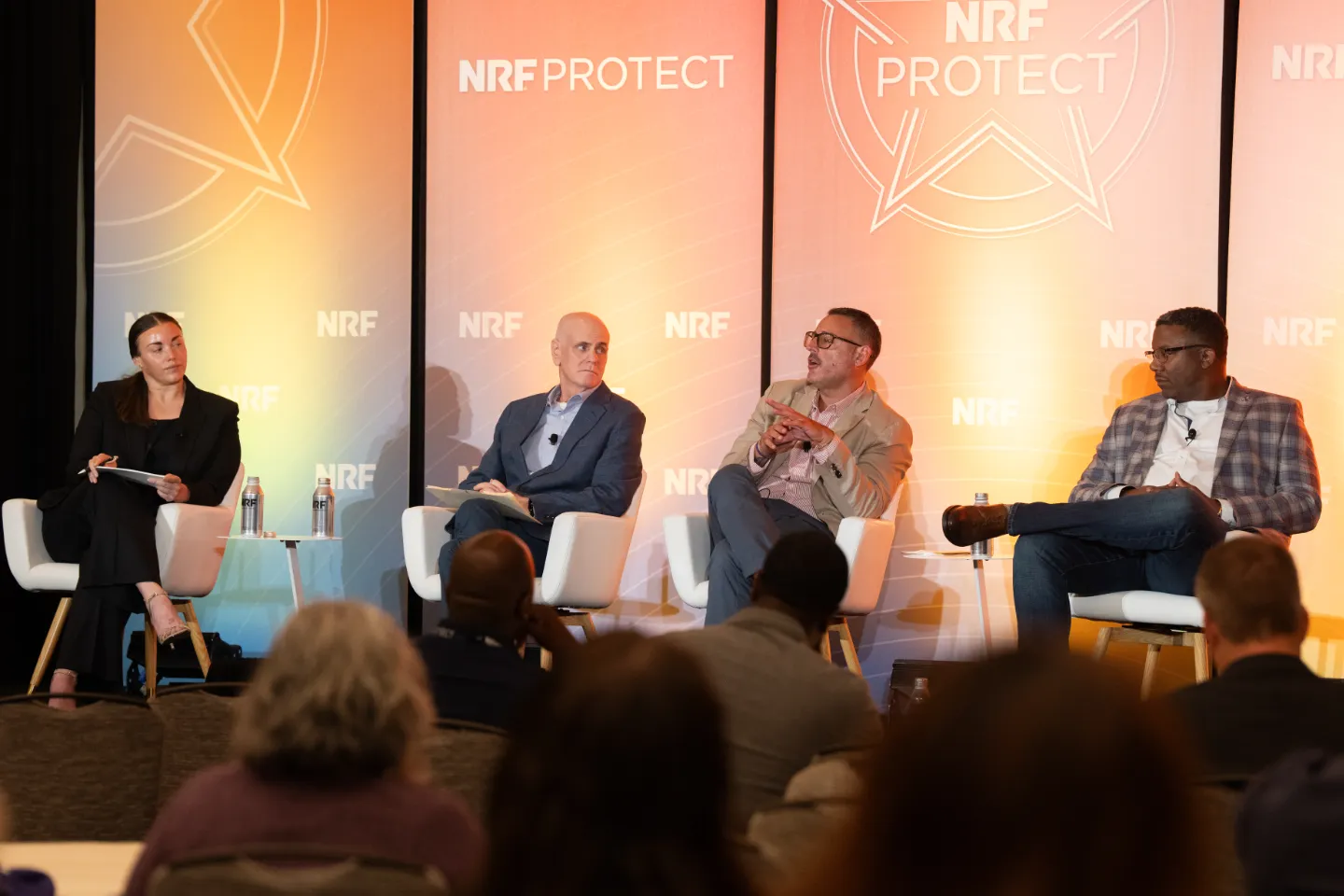
From left: Ashley Shimek leads a discussion at NRF PROTECT 2026 with her J.Crew colleagues Rob Burton, Chris Macera and Marlon Peak, all regional loss prevention managers.
NRF PROTECT
Stay up to date on the latest news and articles about NRF PROTECT.
With all the talk about efficiencies, technologies and creative strategies to solve problems, the idea of "doing more with less" often translates to adding one more thing.
A panel at NRF PROTECT 2026, however, encouraged the opposite: understanding what not to do in order to be more effective at what matters most.
"The best LP teams aren't successful because they do more," said Ashley Shimek, regional loss prevention manager – Madewell Total Brand, J.Crew. "They're successful because they're incredibly disciplined about the things they choose not to do. They understand where they create value, they build strong partnerships, they remove noise and they focus their energy where it has the greatest impact.
"At the end of the day, our job isn't to be involved in everything. Our job is to make sure that the things that matter most are executed exceptionally well."
Shimek was joined by her J.Crew colleagues Rob Burton, Marlon Peak and Chris Macera, all regional loss prevention managers. "Doing more with less" is nothing new for the people in the audience, Shimek acknowledged. What is new — and continues to evolve — is the level of complexity, speed and competing priorities they must manage every day.
In this environment, loss prevention teams can "overfocus on activities that create visibility but not measurable impact," Burton said. Field presence, for example, matters "but it has to be intentional. In large companies, constant physical visits are not always the most effective use of our resources. The question is not, ‘How busy is loss prevention?' The better question is, ‘What has changed because of our involvement?'" Were safety risks reduced, for example? What about shrink?
The panel highlighted the importance of relationships and relatability, such as using the language leaders use and explaining shrink results in dollars rather than percentages.
Relationships and relatability matter in the field, as well. LP can default to leading with policy, as the job is often seen as "black and white," Macera said. "But when we think about what we do and how we do it, most of our interactions with the team are after a sudden event."
Whether it's workplace violence, an escalated customer issue, an emergency or something else, the conversations that follow may be with associates who are upset, scared, angry or uncertain they did the right thing.
The best LP teams aren't successful because they do more … they remove noise and they focus their energy where it has the greatest impact.
"Therefore, the philosophy I lead with is, nothing is more important than what matters most in that moment. If that means leading with empathy and connection, then that's what I'll do. If that's leading with training and policy, then that's where I'm going to help. But I'll have the conversation."
This helps establish credibility, he said, in addition to building partnerships that are based on trust and connection. "By doing that, I think our job becomes naturally easier," he said.
Conversely, not integrating a store's daily routines into the loss prevention function can create resistance with stores and operations teams by. LP may equate the "big three" with cloud, external and internal operations. For stores, however, the big three means back of house, cash wrap and sales floor.
"If we're approaching teams in this manner, and speaking language that they understand, the mindset, in my opinion, shifts from, ‘Oh, we need to get this done for LP,' to a more ownership-centric mindset of, ‘Doing our job is supporting loss prevention,'" Macera said. "It's not an extra step that they have to take."
Peak said it's often possible to tell whether a store has strong operational discipline within a few minutes "by simply looking around." One consistently overlooked area that provides useful insight is the employee break area. If it's neat, clean and organized, he said, "it tells me that the team cares, and the leaders care as well."
He also likes to observe how the team actually operates. "Is everyone functioning, and does everyone know what they're supposed to do? Or do they need leadership and direction?"
Stores unintentionally create risk for themselves, he added, when they cut corners and when convenience and staffing pressures take precedence over process and discipline. "Stores do not recognize their vulnerabilities," he said, "at least not in real time."